
Shop Premium Plants
Browse our extensive collection of premium tropical plants, aroids, and rare ornamental plants.
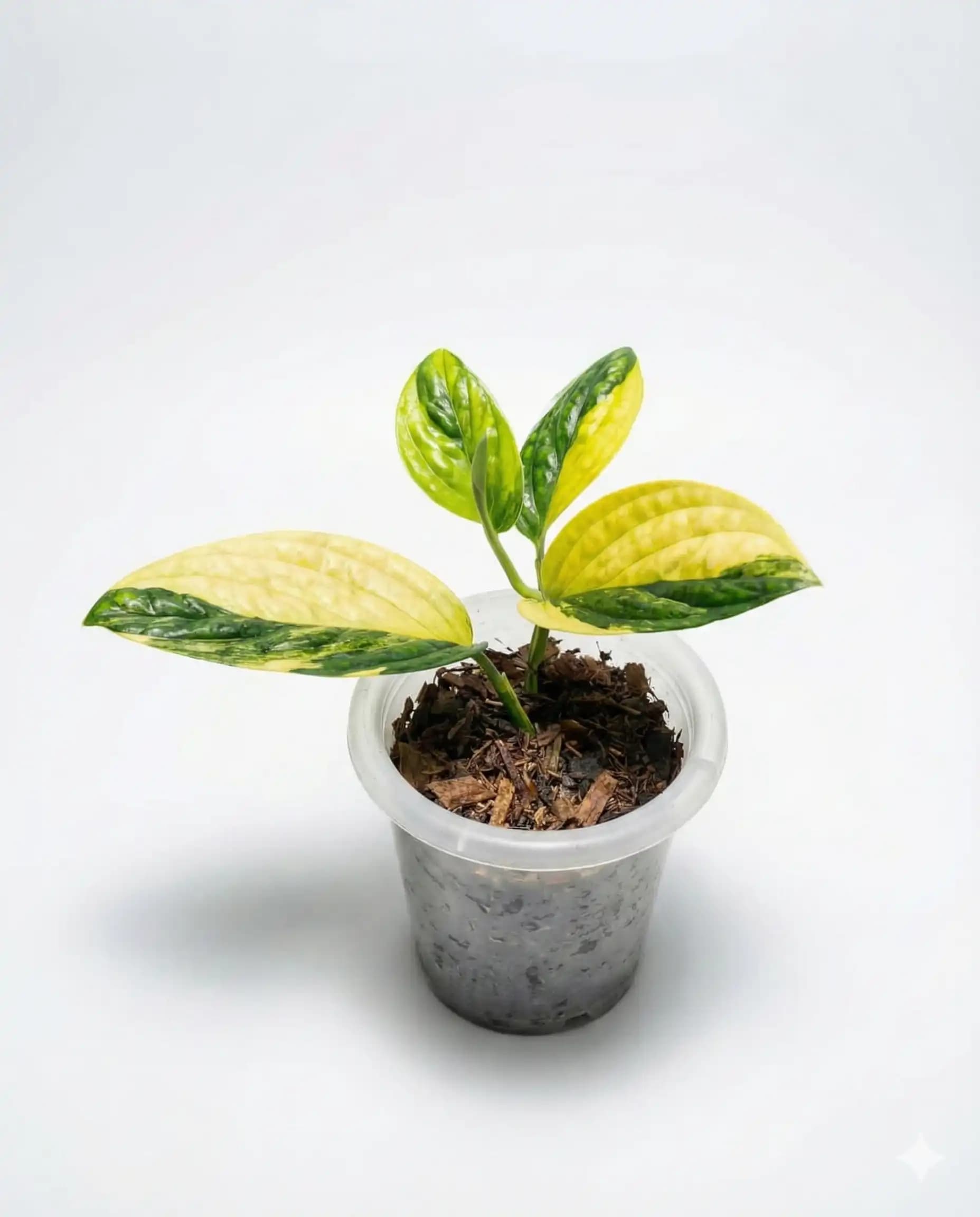
Monstera Karsteianum Peru Variegated
Monstera
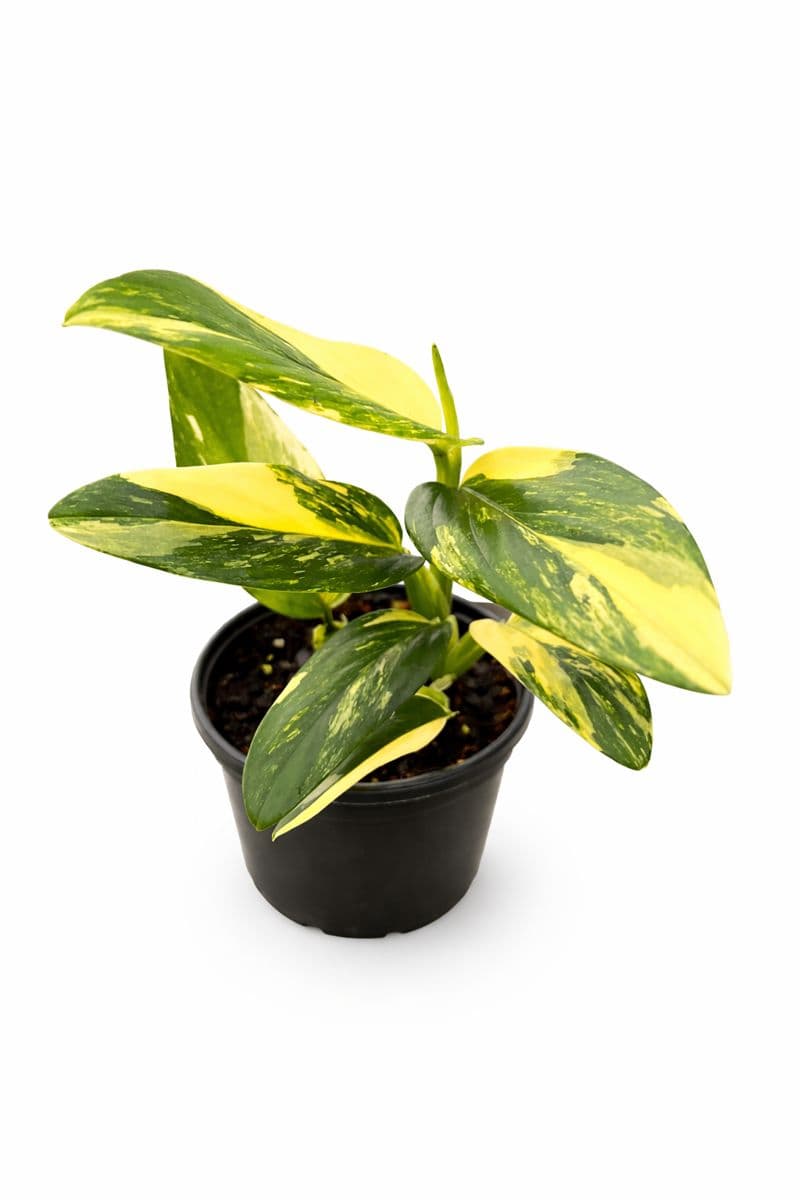
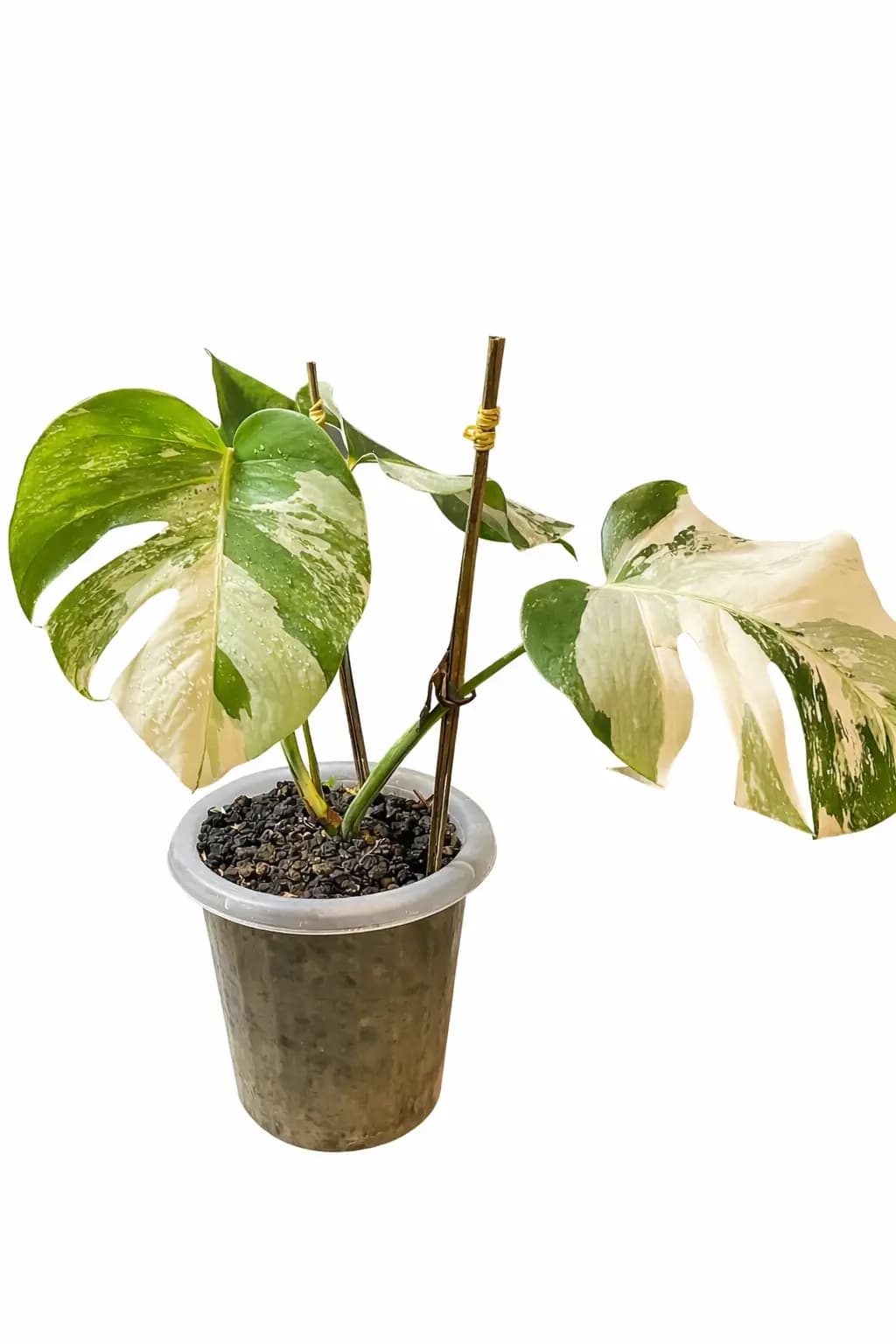
Monstera Variety
The Monstera Magic: A Guide to the "Kings" of Indoor Plants
The Monstera has earned its reputation as the reigning royalty of indoor jungles. Native to the tropical rainforests of Central and South America, these beauties are beloved for their iconic "Swiss cheese" leaves and their ability to bring an instant tropical vibe to any room.
However, the world of Monstera goes far beyond just one plant. There are dozens of species with unique characteristics, ranging from giant giants to fascinating climbers. Here is your guide to the different types of Monstera, from the most popular classics to the rare gems coveted by collectors.
1. Monstera Deliciosa
This is the classic variety we see most often. In Latin, deliciosa means "delicious," referring to the edible fruit it produces in the wild.
- The Look: It features large, heart-shaped leaves that split and develop holes (fenestrations) as the plant matures. It has thick, sturdy stems.
- Vibe: It grows quite large and takes up space, making it the perfect statement piece for a living room corner.
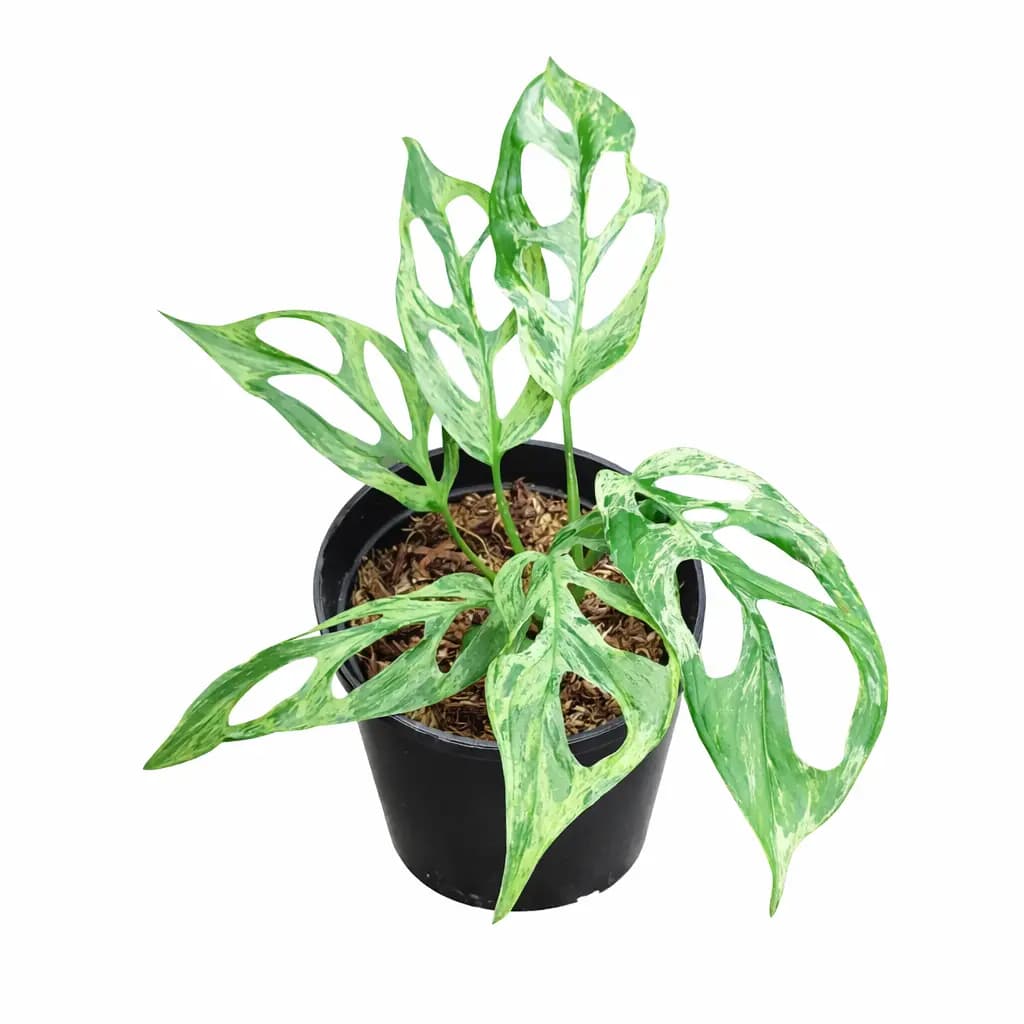
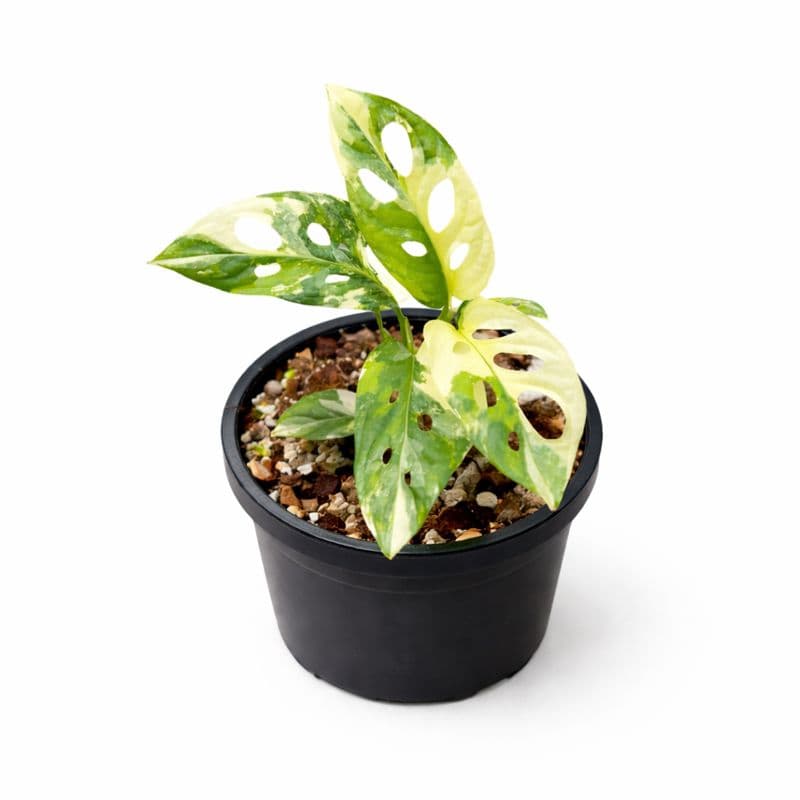
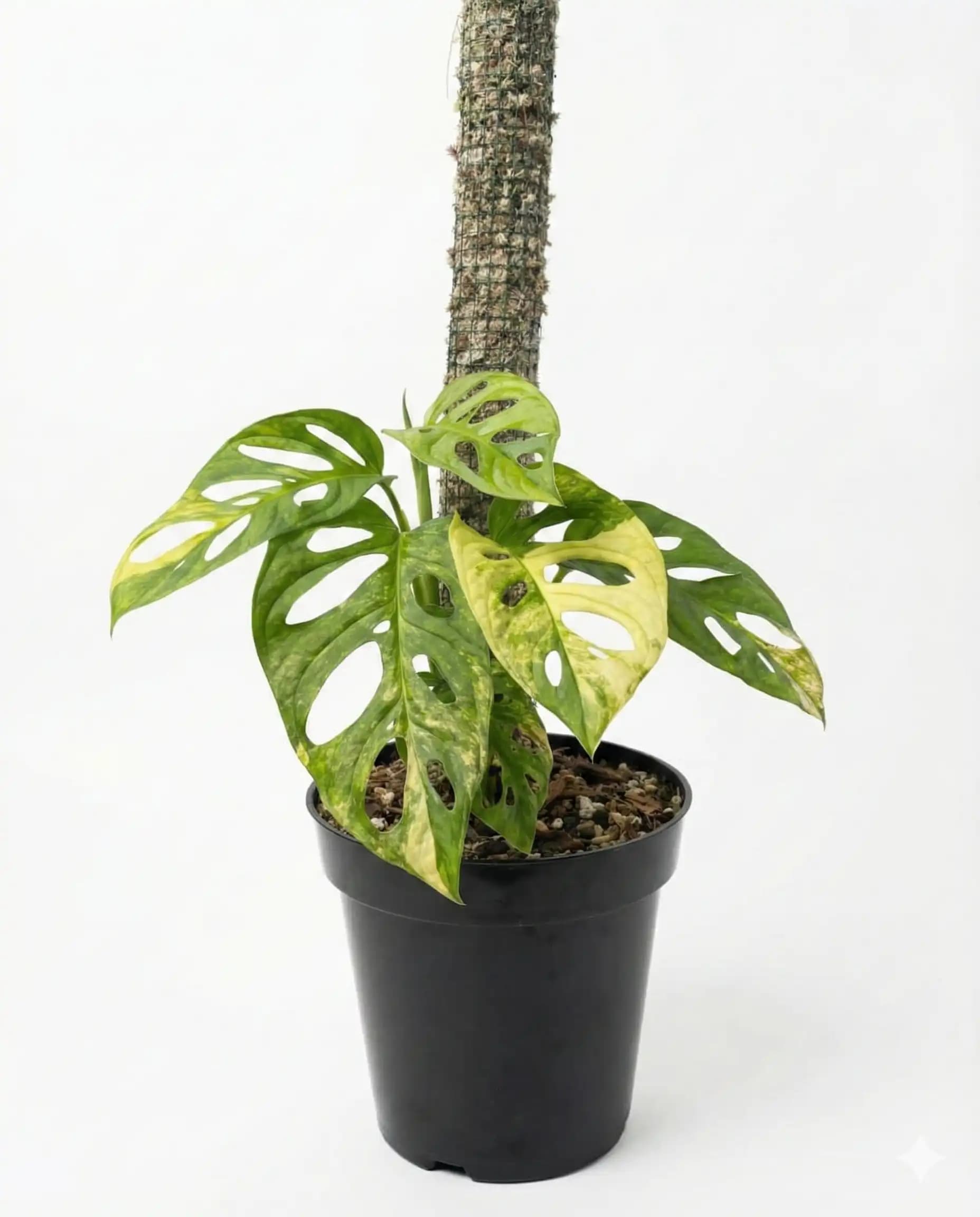
2. Monstera Adansonii (Swiss Cheese Vine)
While the Deliciosa is huge, the Adansonii is its trailing cousin. The holes in this variety are "closed," meaning they don’t break through to the edge of the leaf.
- The Look: Smaller, oval-shaped leaves that are riddled with holes.
- Vibe: A vining plant. It looks stunning cascading from a hanging basket or climbing up a moss pole.
3. Monstera Borsigiana
Often mistaken for M. deliciosa, the Borsigiana is actually a distinct variety (or subspecies).
- The Look: It looks very similar to the Deliciosa, but it is generally smaller and grows much faster. The main difference lies in the geniculate (where the leaf meets the stem); Deliciosa has ruffles there, while Borsigiana is smooth.
- Vibe: Perfect for those who want the classic Monstera look but have limited space.
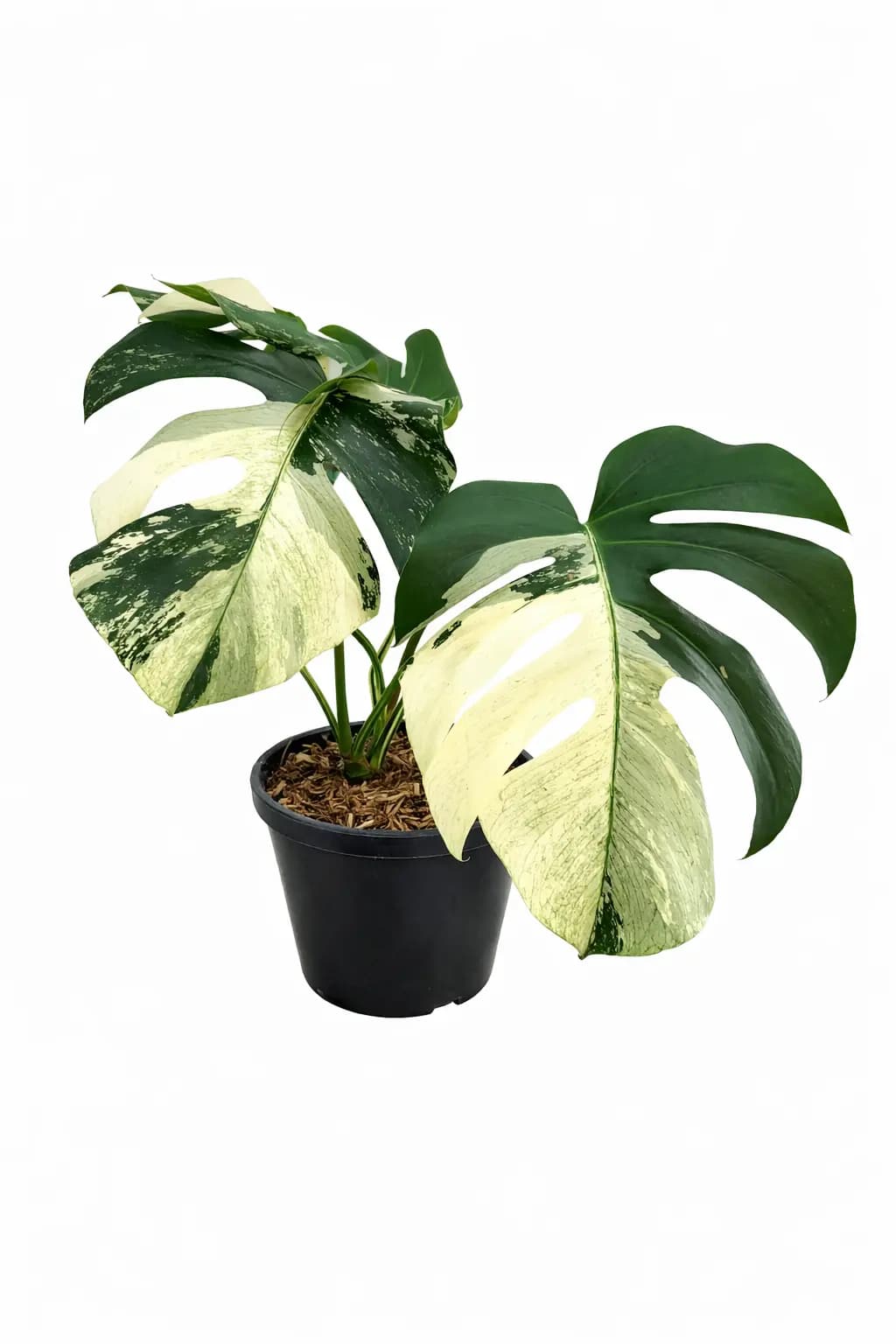
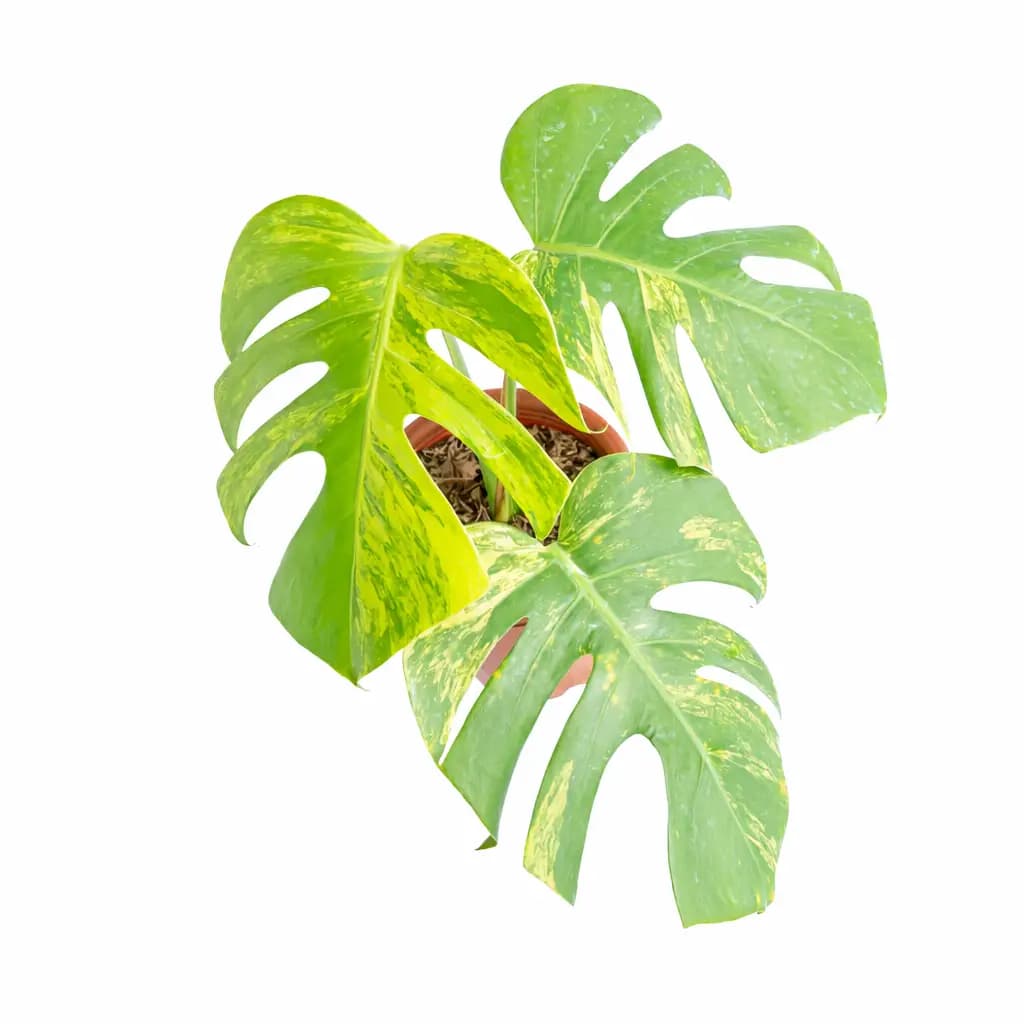
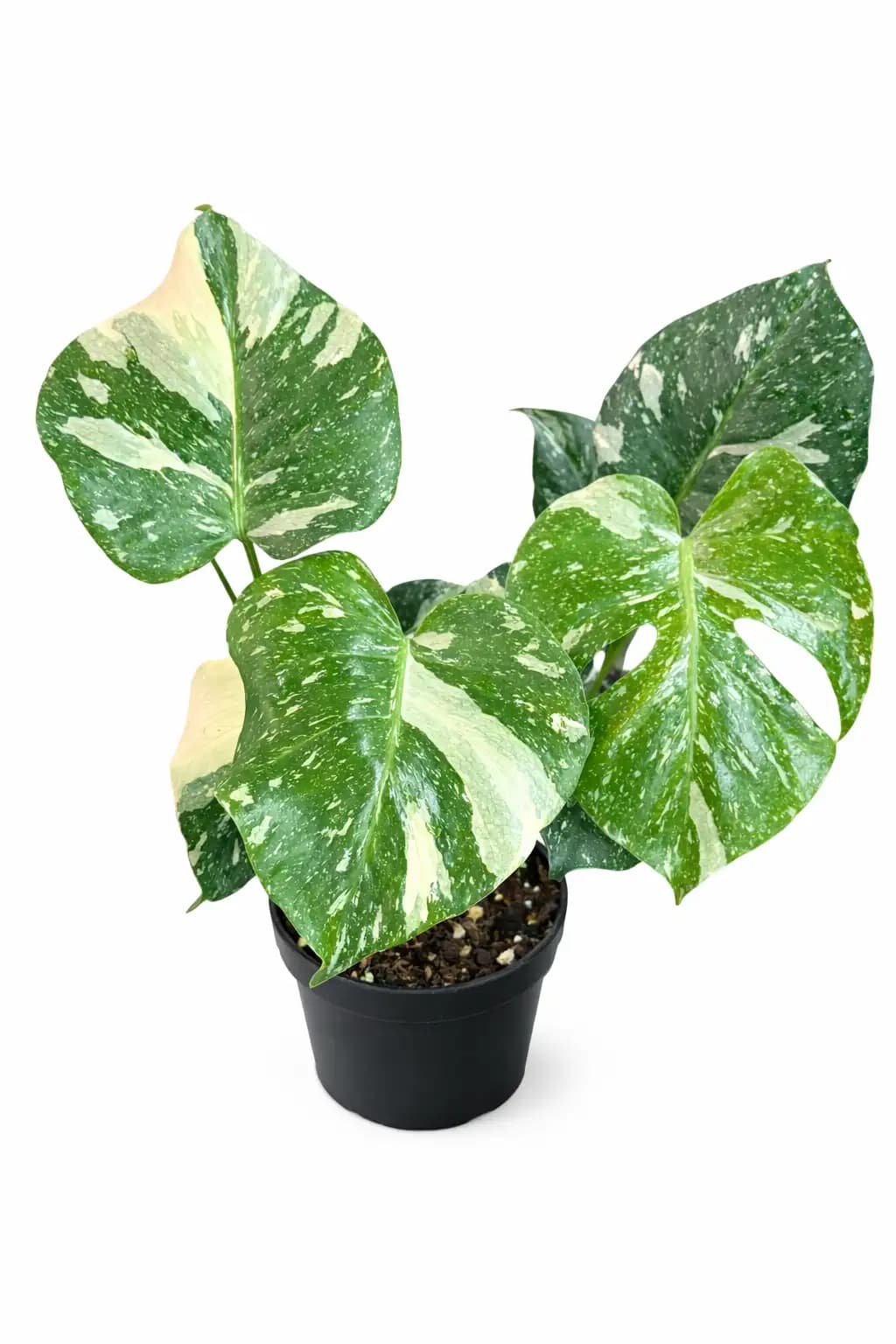
4. Monstera Variegata (Albo & Thai Constellation)
These are the "celebrities" of the Monstera world. They aren't a different species, but rather a genetic mutation of M. deliciosa or M. borsigiana.
- The Look: They feature stunning white, cream, or yellow patterns on their green leaves.
- Albo: Features stark white patches. This variegation is unstable (it can revert to green).
- Thai Constellation: Features creamy, galaxy-like speckles. This variation is stable and lab-created.
- Care Note: They need brighter light than green Monsteras because the white parts cannot photosynthesize.
5. Monstera Dubia
This is one of the most unique species with a fascinating growth habit.
- The Look: When young, the small, heart-shaped leaves feature beautiful silver and green patterns and lie completely flat against a surface (like a shingle). As the plant matures and climbs high, the leaves expand and eventually split.
- Vibe: Known as a "shingle plant," it looks like living wallpaper climbing up a plank of wood.
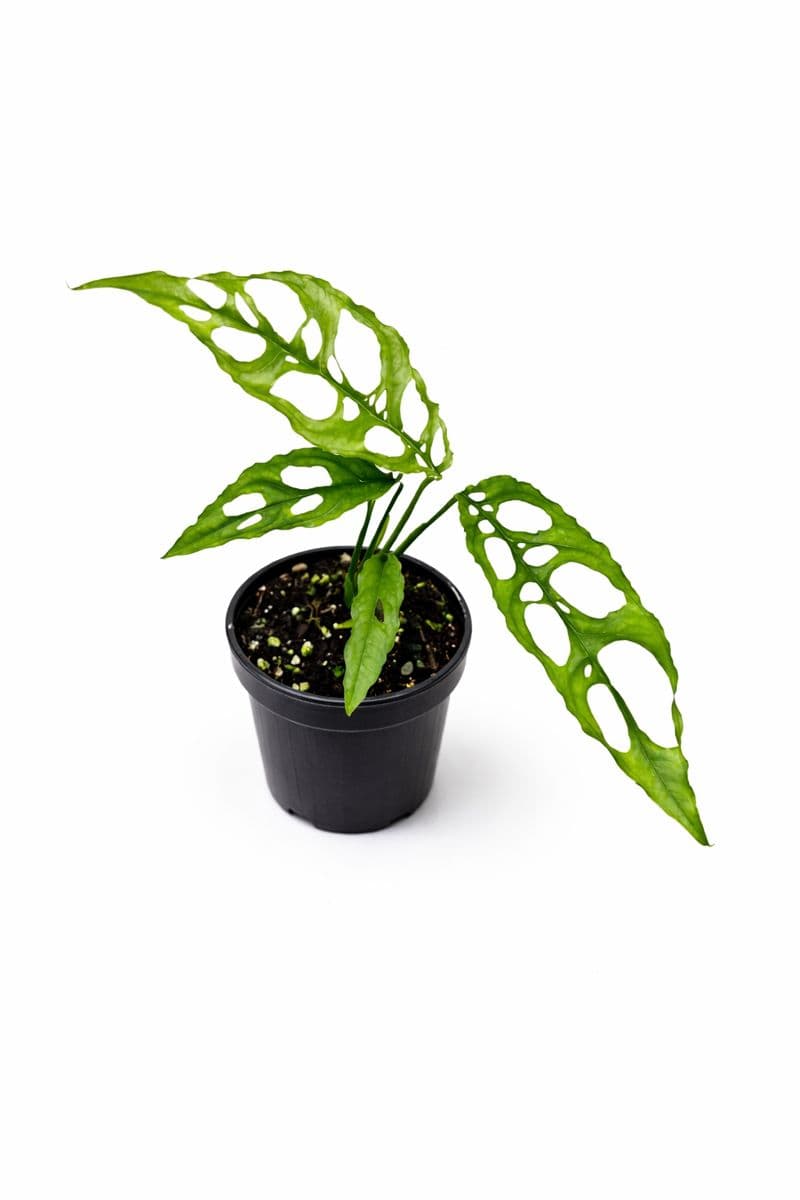
6. Monstera Obliqua
Often considered the "Unicorn" of the plant world because it is incredibly rare. Many sellers mislabel Adansonii as Obliqua, but they are very different.
- The Look: The leaves are paper-thin and delicate. About 90% of the leaf surface consists of holes, held together by very fine filaments.
Vibe: Extremely fragile, slow-growing, and requires very high humidity. Definitely a plant for experienced collectors.
7. Monstera Siltepecana
If you love plants with a silvery texture, this is the one for you.
- The Look: It has lance-shaped (elongated) leaves with dark green veins and a silvery-grey surface.
- Vibe: In its juvenile stage, it has no holes. However, if you let it climb and mature, the leaves will eventually split like a Deliciosa.
8. Monstera Standleyana (Alata)
Often nicknamed the "Philodendron Cobra," even though it is taxonomically a Monstera.
- The Look: The leaves are thick, oblong, and glossy. It is commonly found in a variegated form with white or yellow splashes.
- Vibe: It doesn't usually develop holes, making it look quite distinct from its siblings. It is tough, hardy, and loves to climb.